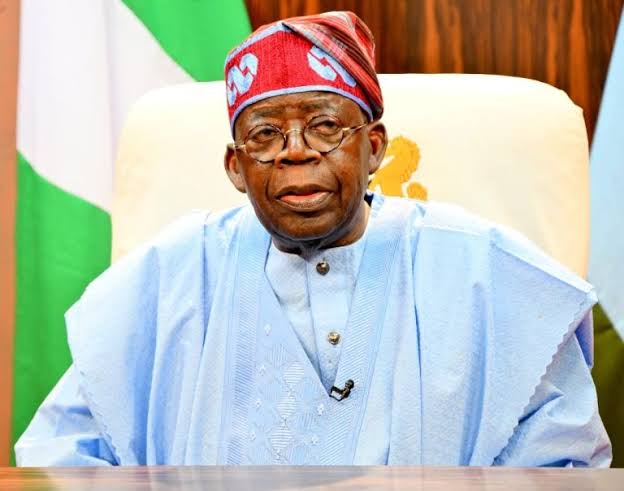
Nigeria’s President Bola Tinubu has demanded that Africa be granted two permanent seats and veto power on the United Nations Security Council, as he called for a radical shakeup of the global financial system and equitable participation in economic decision-making. The demand was made during a high-level meeting at the 76th Session of the UN General Assembly in New York. According to reports from multiple sources, Tinubu stated that Africa cannot continue to fill the United Nations’ agenda without at least two permanent seats on the Security Council.
The call for a more equitable representation on the Security Council has been echoed by other African leaders, who argue that the current distribution of power is outdated and does not reflect the global political landscape. The last major expansion of the council occurred in 1965, when two non-permanent seats were added for Africa.
In a statement to journalists, Tinubu emphasized the importance of African representation on the Security Council: ‘We cannot continue to rule the world in 2026 with the distribution of power that was established in 1945. It is high time we had a radical shakeup of the global financial system and equitable participation in economic decision-making.’
While the demand for additional seats for Africa has been met with some resistance, particularly from Western powers who hold permanent seats on the Security Council, Tinubu’s statement has sparked a renewed debate about the need for greater representation of developing countries in global decision-making bodies.
This push for reform follows recent calls by African leaders to address the continent’s underrepresentation in international institutions. In August, President Uhuru Kenyatta of Kenya called for an overhaul of the World Bank and International Monetary Fund to give more voice to developing countries.
As the debate continues, it remains uncertain whether Tinubu’s call for reform will result in meaningful change. However, with growing support from African leaders, the demand for greater representation on the Security Council is likely to remain a prominent issue in the coming years.

 By
By